
Content overview
sprungmarken_marker_703
Sustainable chemical feedstocks based on PtX technology and renewable energy

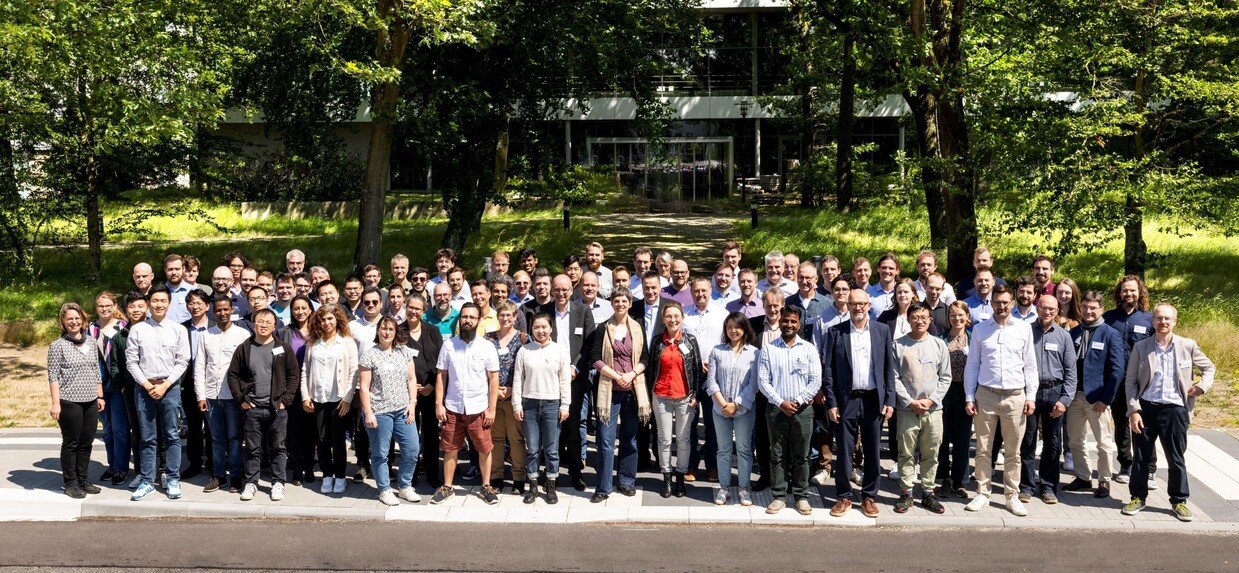
Prof. Ulrike Krewer (Helmholtz subtopic spokesperson “Power-based fuels and chemicals”, KIT) and Prof. Ursel Fantz (Acting division head ITER Technology & Diagnostics, IPP) welcomed the participants and opened the status workshop at the Max Planck Institute for Plasma Physics (IPP).
There were presentations on the six themes, which covered their progress and outstanding issues.
- Modular integrated plants
- Conversion of CO/CO2-rich syngas
- Plasma reactors / Plasma activation of inert molecules
- Direct electrochemical synthesis (Electocatalysis beyond hydrogen)
- MIEC membrane reactors
- Technologies for LOHC - Liquid organic hydrogen carriers
These presentations were interspersed with two poster sessions featuring 47 posters, as well as a tour of the IPP's laboratories and research infrastructure.
The Plasmas for Gas Conversion group’s laboratory and the ASDEX Upgrade (YouTube video) experiment were stops on the lab tour, offering exciting insights into the work being done and opportunities for discussion. The evening's agenda included a visit to a traditional Bavarian beer garden and an evening presentation on the ITER fusion experiment.
The participants came from the Forschungszentrum Jülich (FZJ), the Helmholtz-Zentrum Berlin (HZB), the Karlsruhe Institute of Technology (KIT), the University of Stuttgart, and the Max Planck Institute for Plasma Physics (IPP).
Thank you very much for your hospitality at the IPP on the Garching Research Campus in Garching near Munich.
Chilean-German Summer School on Power-to-X
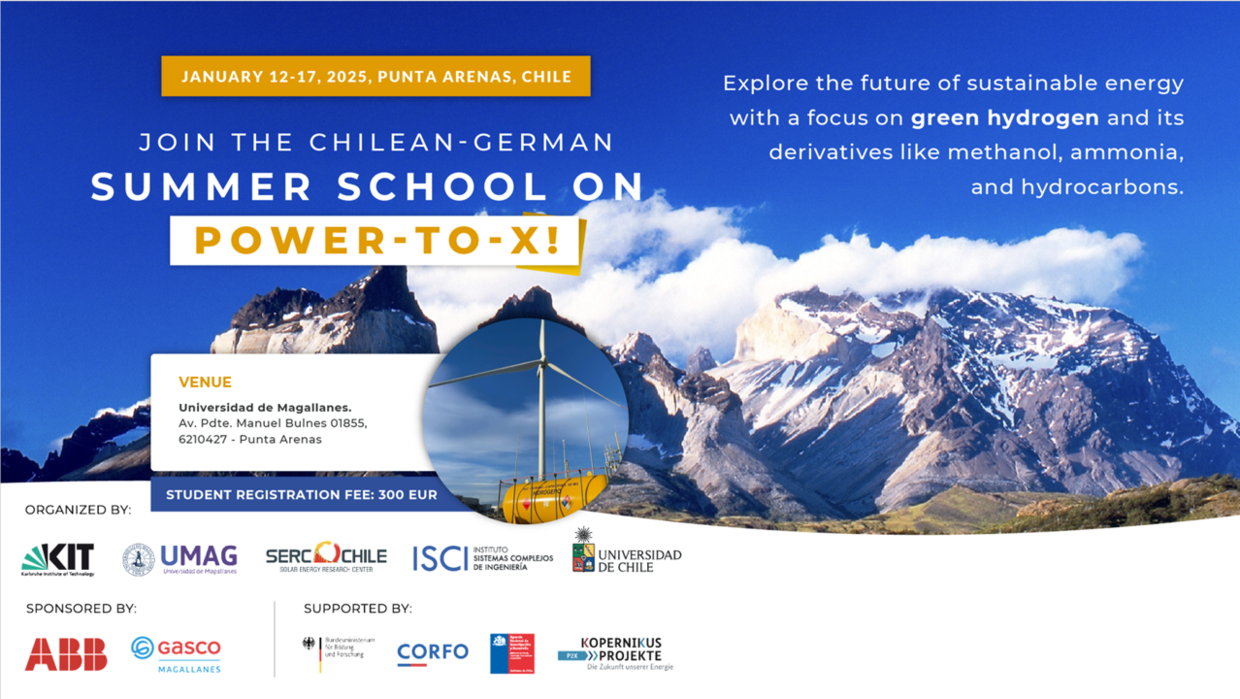
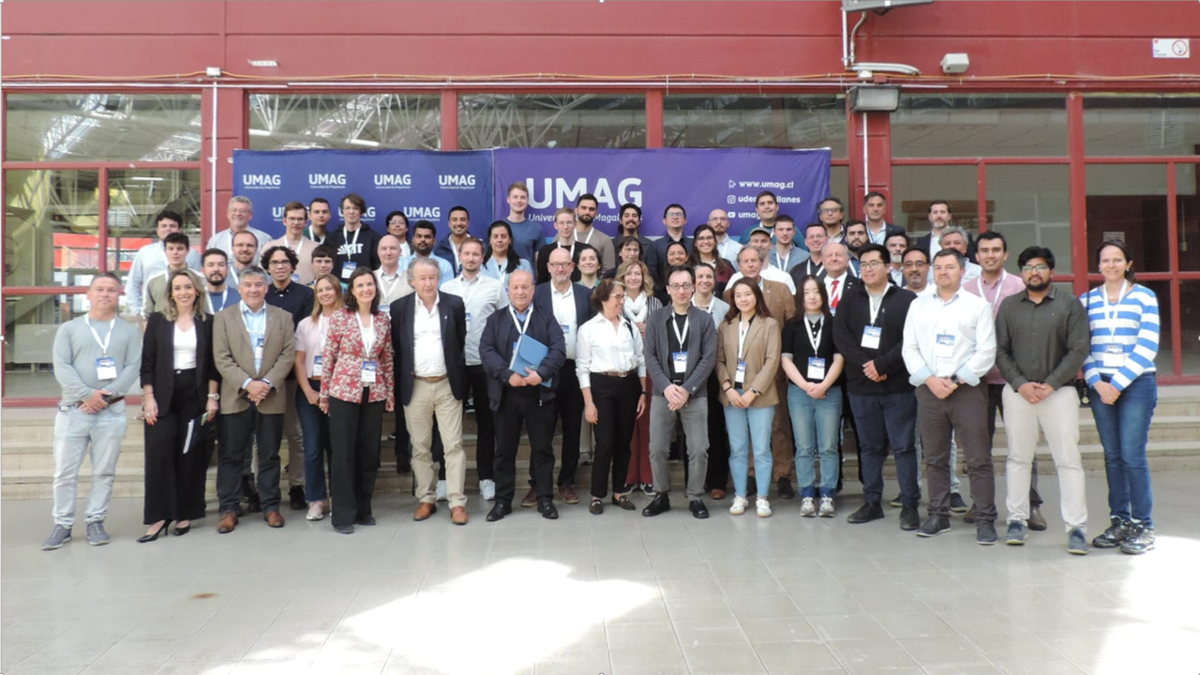
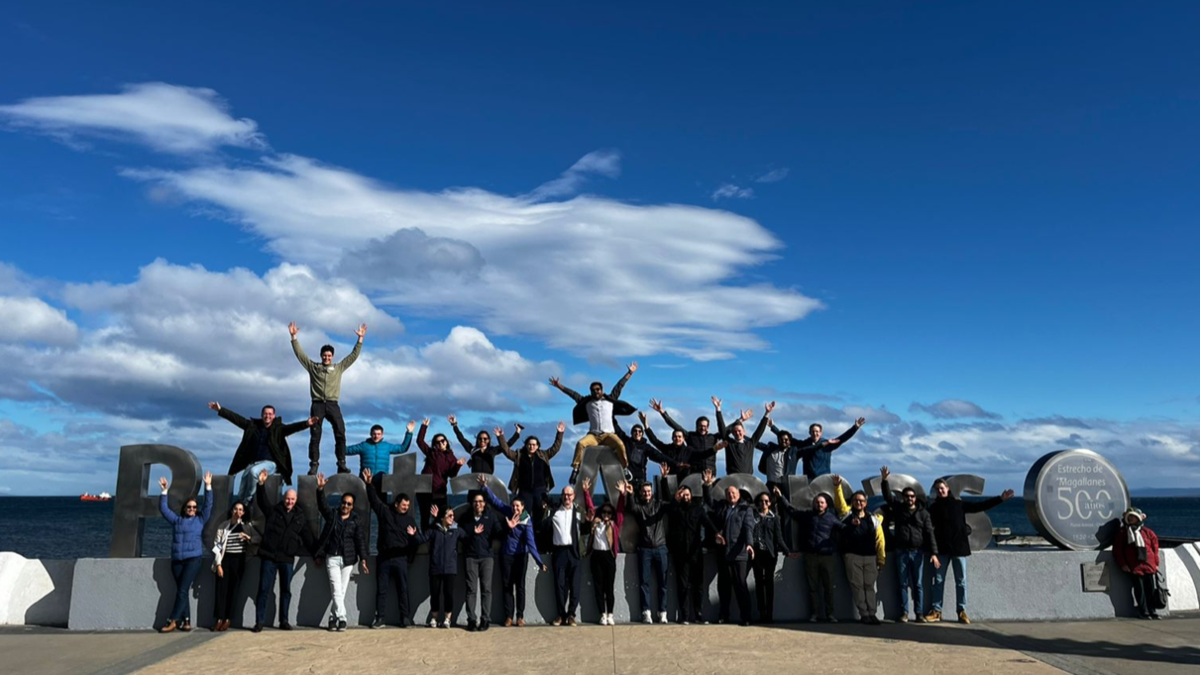
From January 12 to 17, 2025, the future of sustainable energy was explored in Punta Arenas, Chile, with a focus on green hydrogen and its derivatives such as methanol, ammonia and hydrocarbons.
These products, derived from renewable energy sources, are crucial for reducing greenhouse gas emissions in hard-to-electrify applications worldwide.
The event started with warm welcome speeches from the organizing institutions. Representatives from local authorities provided valuable insights into the regional energy transition, offering both local and national perspectives on developments in the Magallanes region and across Chile.
Participants had the opportunity to engage in keynote presentations, research discussions, and interactive workshops to address the challenges and opportunities along the value chain of international power-to-x projects in the context of the global energy transition. Collaboration between Chile and Germany can contribute significantly to unlocking the potential of renewable power and creating sustainable solutions for future generations.
The third day covered the Power-to-X value chain, focusing on grid integration, derivatives, and decentralized energy solutions. These topics were presented by representatives from Karlsruhe Institute of Technology and the University of Chile.
After the presentations, students began their work with a round of project pitches. Each participant who pitched received a glass bottle sponsored by Kopernikus.
The event featured active participation from startups such as Spark e-Fuels, Phlair, and Reborn, alongside industry contributions from Ineratec, Ventus, Y-TEC, NeoZet, Neuman-Esser, offering a dynamic mix of innovative and commercial perspectives on energy solutions.
A key moment occurred on the fourth day, when participants visited the Haru Oni (HIF) plant for an in-depth tour of the hydrogen production facilities. The day concluded with dinners sponsored by ABB and Gasco Magallanes and a nature excursion to Fort Bulnes National Park, adding a social and environmental dimension to the experience.
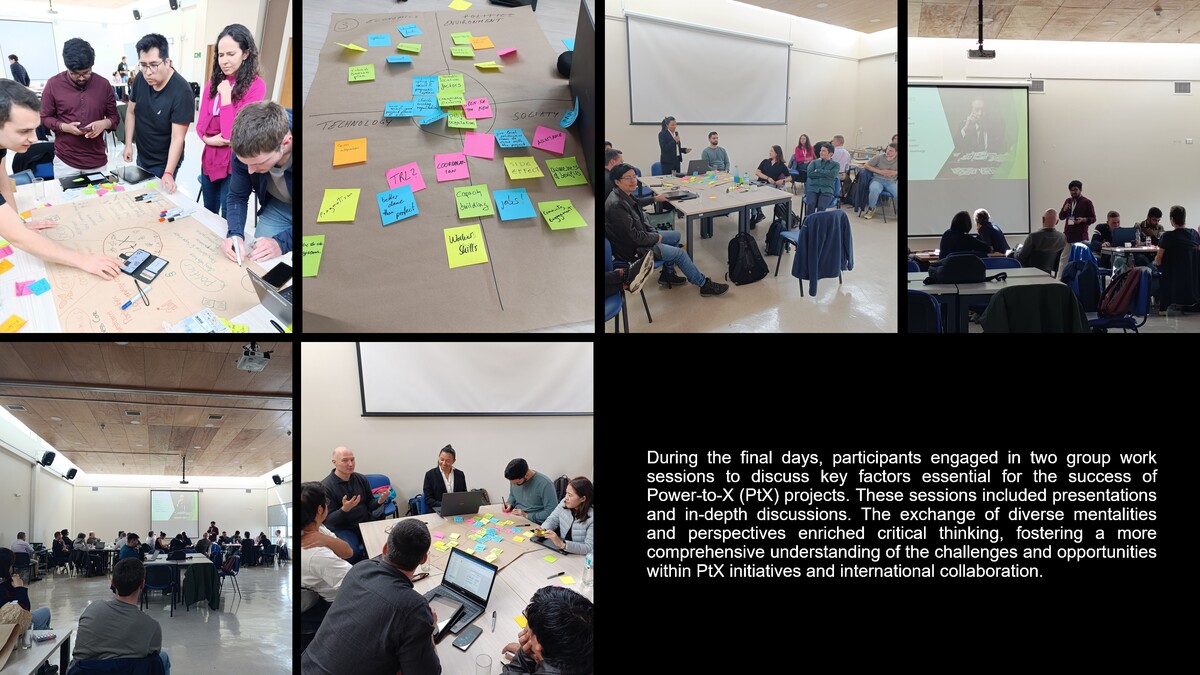
During the final days, participants engaged in two breakout sessions to discuss key success factors for Power-to-X (PtX) projects. These sessions included presentations and in-depth discussions. The exchange of diverse mentalities and perspectives enriched critical thinking, fostering a more comprehensive understanding of the challenges and opportunities in PtX initiatives and international collaboration.
Attendees had the unique opportunity to explore the technology and innovation landscape, network, and experience the stunning natural beauty of Patagonia.
How will power-based fuels and chemicals replace the current fossil feedstocks in the future?
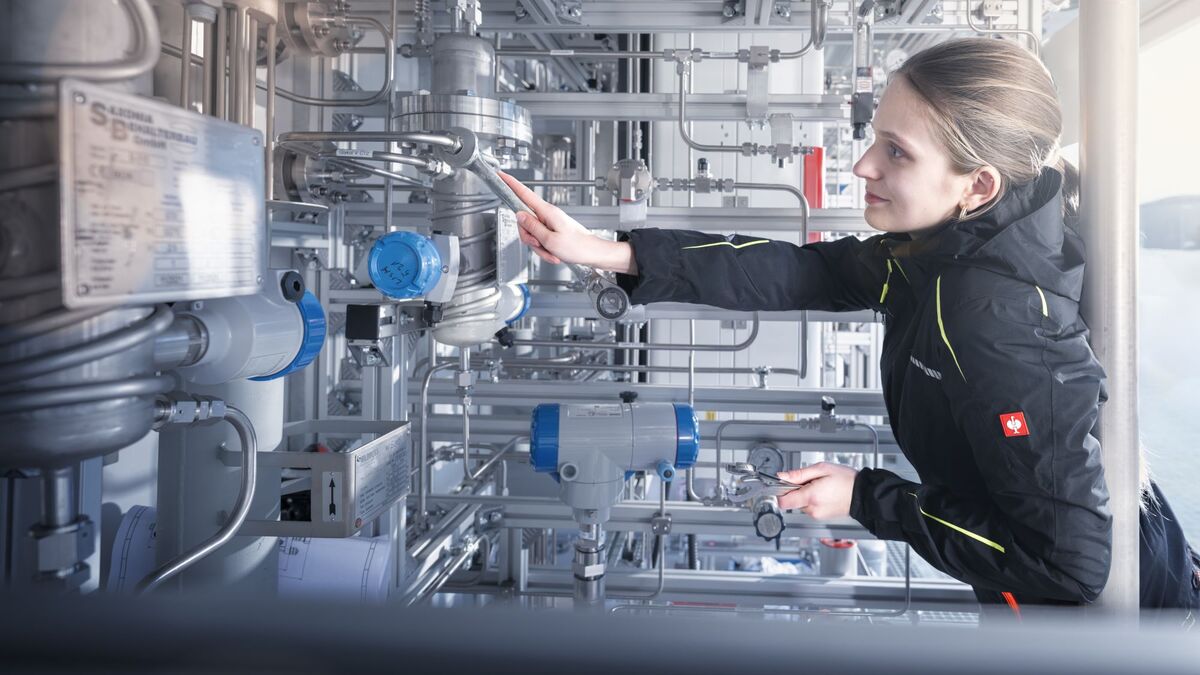

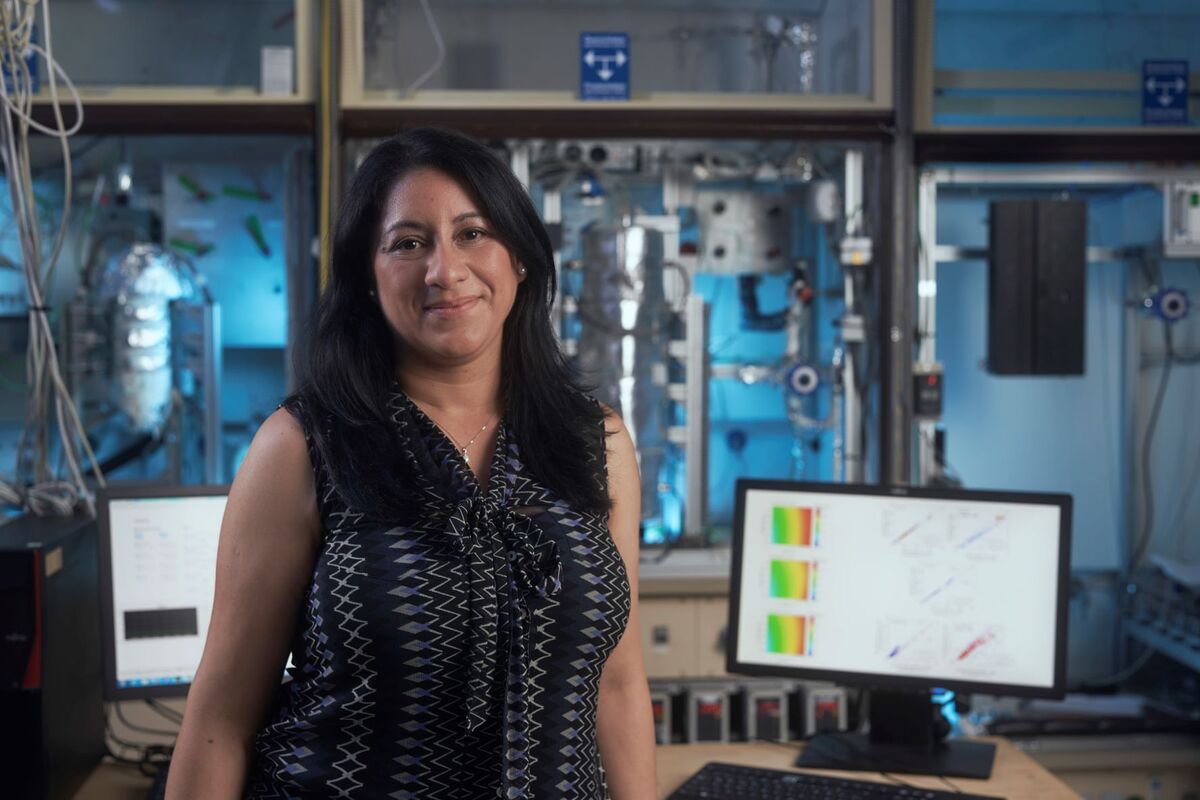

In order to achieve the climate goals, sector coupling and electrification based on renewable energies in the energy sector and industry must be optimized in a joint, holistic approach. Today, 70 to 80 percent of chemical feedstocks are derived from fossil sources. In the future, fuels and chemicals must come from renewable electricity for green hydrogen and renewable or recycled carbon sources such as CO2, biomass or waste.
To provide the technologies, materials and processes to meet these challenges, the approximately 200 scientists in the "Power-based Fuels and Chemicals" subtopic are working together in six topic areas:
- MIEC membrane reactors
- Conversion of CO/CO2-rich syngas
- Technologies for LOHC - Liquid organic hydrogen carriers
- Direct electrochemical synthesis (Electocatalysis beyond hydrogen)
- Modular integrated plants
- Plasma reactors / Plasma activation of inert molecules
Prof. Ulrike Krewer (KIT, Helmholtz Subtopic Spokesperson), Prof. Jörg Sauer (KIT Program Spokesperson) and Prof. Roland Dittmeyer (KIT Topic Spokesperson) welcomed the 115 participants. The presentations and the poster session with about 50 posters provided an opportunity for discussion and exchange of new ideas. The program also included a tour of the research facilities at KIT Campus North and South on a sunny June day.
Participants were invited to visit three of the six possible stations on the lab tour.
- Power to X Lab @ Energy Lab
- Catalyst Design Center (CDC) @ IKFT
- Liquid Metal Based Thermochemistry and Heat Storage @ ITES
- Plasma Laboratory @ IHM
- 3D Printing Lab & Electro Catalysis of CO2 @IMVT
- Electrochemistry Lab @ IAM-ET, Campus South (bus transfer)
Our website offers information about the scientists who have presented their laboratories and their research topics.
- Dr. Herrera Delgado works at the Catalyst Design Center (CDC),
- Dr. Navarrete Muñoz investigates the activation of carbon dioxide with microwave plasma,
- Dr. Philipp Röse is working on direct electrochemical synthesis,
- Dr. Klarissa Niedermeier investigates Liquid Metal Based Thermochemistry and Heat Storage.
How will power-based fuels and chemicals replace the current fossil feedstocks in future?


To achieve the climate targets, sector coupling and electrification based on renewable energies in the energy sector and industry must be optimized in a joint holistic approach. Up to now, 70 - 80 percent of basic chemical materials are taken from fossil sources. In the future, fuels and chemicals must come from renewable electricity for green hydrogen and renewable or recycled carbon sources such as CO2, biomass or waste.
In order to provide technologies, materials and processes for these challenges, the approximately 200 scientists in the "Power-based Fuels and Chemicals" subtopic are working together in six themes:
- MIEC membrane reactors
- Conversion of CO/CO2-rich syngas
- Technologies for LOHC - Liquid organic hydrogen carriers
- Direct electrochemical synthesis (Electocatalysis beyond hydrogen)
- Modular integrated plants
- Plasma reactors / Plasma activation of inert molecules
Prof. Ulrike Krewer (KIT), Prof. Olivier Guillon (FZJ) and Prof. Wilhelm Meulenberg (FZJ) welcomed the participants. The presentations and the poster session with 43 posters gave the opportunity for discussion and exchange of new ideas. The program also included a tour of the institutes and laboratories at FZJ.
The next meeting of Subtopics 3.2 '"Power-based Fuels and Chemicals" will take place in June 2024 at KIT. Many thanks for the hospitality and the excellent organization and preparation of the event by the colleagues from Forschungszentrum Jülich.
Workshop "Grid Integration of Electrolysis" with KIT Technology and Grid Experts

Scientists of the Helmholtz programs ESD and MTET discussed scientific and technical issues of the grid integration of electrolysis and subsequent steps on May 12, 2023, at KIT Campus North. After a first scientific and technical exchange on the important key topics, working groups were formed to deal with the following issues in the future:
-
What kind of transient data do we need/could we use? (experimental side)
-
Co-simulation in open software sense (modeling)
-
How to connect renewable energy sources to electrolysers in the most efficient way? The role of power electronics in connecting electrolysers to the grid.
-
How to design electrolyzer systems? Operation of electrolyzer itself (SOH, interfaces,…)
-
Dynamics of the downstream processes; role of storage as buffer
Workshop "Negative Emissions Technologies at KIT" (NET@KIT)


After the introduction by Prof. Roland Dittmeyer, KIT President Prof. Holger Hanselka gave a warm greeting to the participants.
Prof. Sabine Fuss held the first keynote lecture. She was contributing author of the IPCC Sixth Assessment Report (IPCC AR6 WG1, chapter 5 and IPCC AR6 WG2, chapter 16). Her main research interests include carbon dioxide removal and net zero strategies. Prof. Fuss presentation entitled "The role of CO2 removals for the Oasis climate goals - current state and future scenarios" highlighted the importance of negative emissions / carbon dioxide removal (CDR), as all emission pathways limiting global warming to 1.5 °C or 2 °C by 2100 require the use of CDR approaches in combination with emission reductions.
Due to the many questions, the discussion about the presentation was continued during the coffee break. In the following keynote speeches, among others, the research activities of KIT on NET were presented:
- „Electroswing Approaches for CO2 Direct Air Capture“ – M. Sc. S. Hosseini (IMVT)
- „Biobased NET – The Contribution of Fast Pyrolysis“ – Dr. A. Funke (IKFT)
- „Helmholtz Climate Initiative ‐ Next Steps towards Climate Neutrality“ – Dr. F. Bauer (INE)
- „Zero‐Emission Circular Concrete through Hydrothermal Sequestration“ – Dr. K. Garbev (ITC)
- „Distributed Capture of CO2 in Buildings ‐ Vision and Exemplary Demonstration at KIT “ – Prof. R. Dittmeyer (IMVT)
- „NECOC ‐ atmospheric CO2 becomes a valuable raw material“ – Dr. B. Dietrich (TVT)
- „Sustainability Assessment of Fuel Production Routes“ – Dr. M. Haase (ITAS)
The second keynote lecture entitled "The Role of Carbon Management in Achieving Net‐Zero" was given by Prof. Jennifer Wilcox. She is the Principal Deputy Assistant Secretary in the Office of Fossil Energy and Carbon Management at DOE and is on leave as the Presidential Distinguished Professor of Chemical Engineering and Energy Policy at the University of Pennsylvania. In addition, as a senior fellow at the World Resources Institute (WRI), she led WRI’s Carbon Removal Program. Prof. Wilcox joined the workshop online.
In the final panel discussion, the different frameworks, technical and political issues and public perceptions in Europe and America were discussed in detail by the audience of young and experienced scientists, presenters, participants and guests. This event has underlined the importance of the topic. It has brought together young and experienced researchers as well as the guests from different disciplines at KIT and facilitated interesting talks and discussions on the diverse research approaches of negative emission technologies and carbon dioxide removal. The coffee breaks and the poster session enabled a fruitful exchange.
Many thanks to Ms. Heike Kull, manager of the KIT Graduate School ENZo, Prof. Thomas Wetzel and colleagues for organizing this successful event!
Workshop "Urban Resource Hub" - What are the challenges of recycling now and in the future?


The workshop "Urban Resource Hub" took place at the ZEISS Innovation Hub focused on the current and future challenges of recycling in a circular economy from the perspective of manufacturers (Sto Group), recyclers (Nordmineral-Recycling, Heinrich Feeß GmbH, Becker Elektrorecycling Chemnitz GmbH, Remondis SE) and the Federal Environment Agency (UBA).
- "Technology, logistics, time and money - an insight into recycling WDVS (external thermal insulation composite systems)"
- "Building material versus waste"
- "Legal framework of circular economy"
- "Circular economy in the construction industry"
- "Potential for recyclable materials in household collection"
- "Circular economy as a building block of the sustainability strategy"
After a series of keynote presentations on the topic from the various sectors and on the legal framework, an exchange between the participants in small groups was moderated in the further course using the World Café method. Afterwards the results of each table were presented and discussed together. This exchange enabled Helmholtz-researchers of the Topic "Resource and Energy Efficiency" from HIF, HZDR and KIT to understand what academia can contribute: to identify systemic links and technologies that can be further developed through joint projects and in collaborations.
In the last part of the workshop, ideas for specific projects and calls for proposals at national (AiF, BMBF, BMWK) and EU level were developed in small groups in a "funding market".
Many thanks for the fruitful discussions and the open exchange to all participating guests from the companies, from the Federal Environment Agency and from the Helmholtz Centers HZDR, HIF and KIT!
9th Annual Meeting of the KIT Energy Center


The scientific contributions of KIT energy research to the accelerated implementation of the energy transition were the focus of the conference on July 14, 2022. After the welcoming address by KIT President Holger Hanselka, there were presentations from the Topics of the KIT Energy Center on the following subjects, among others:
- Change of times in energy supply: When and with which technology? (Prof. Dr. Eva Schill, INE)
- Finding the batteries of tomorrow today (T.T. Prof. Dr.-Ing. Helge S. Stein, HIU)
- Energy Use: From renewable electricity to chemical energy sources via integrated process chains (Prof. Dr. Ute Karl and Michael Riedinger, EIFER and IMVT)
In the further course of the program, the Heinrich Hertz Award was presented by Dr. Christoph Müller Netze BW GmbH to Prof. Dr.-Ing. Jutta Hanson from the Technical University Darmstadt.
The poster session allowed young scientists and PhD students to present and discuss their research results. The poster prize of the EnBW Foundation was awarded by Prof. Dr. Wolfram Münch EnBW AG to Mr. Ankur Ghosh Chowdhurya. Who presented the results of his work titled
- "Synthesis of stable zinc oxide based catalysts for carrying out direct dehydrogenation of methanol to achieve (a) anhydrous formaldehyde & (b) highly selective hydrogen as by-product".
He has carried out this work as a BASF PhD student at IKFT/KIT in the framework of the NAMOSYN project.
Interesting talks and discussions on energy topics between the researchers of the KIT Energy Center and the guests from industry and science could be held in the afternoon and evening at the summer party in a convivial atmosphere in front of the KIT Casino. Many thanks to KIT Energy Center for organizing this nice event!
4th Doctoral Colloquium Bioenergy (DOC2021)


This year, the 4th DOC2021 Doctoral Colloquium Bioenergy was organized on September 13-14, 2021 by the Institute of Catalysis Research and Technology (IKFT) of Karlsruhe Institute of Technology (KIT) supported by DBFZ in Leipzig and by the Scientific Advisory Board, which comprises more than 40 renowned bioenergy scientists from Germany, Austria, Switzerland and Norway.
Future researchers, industry representatives and policy makers need to be brought together at an early stage to share knowledge and discuss research gaps and challenges. At the same time, networking between scientific institutions that are already intensively involved in bioenergy research needs to be expanded.
Addressing that demand, the Doctoral Colloquium BIOENERGY was initiated in 2018. Since then, it does not only serve as a platform for junior scientists to gain further qualification, but also provides an opportunity for networking and scientific exchange. Doctoral researchers from both universities and other research institutions present and discuss their latest results and advancements.
Theme fields (inter alia)
- Sustainable resource base
- Bioenergy system analysis
- Thermochemical conversion
- Biochemical conversion
- Biorefineries / Biofuels
The Doctoral Colloquium BIOENERGY covers every part of the biomass conversion chain, from the feedstock to different conversion pathways and their technological implementation, up to the resulting products and services. In addition, the necessary system analyses and measures for system integration were addressed.
The 4th Doctoral Colloquium BIOENERGY started with a guided laboratory and plant tour at the Karlsruher Institut für Technologie (KIT), Campus-Nord.
Twitter: ∂doc_bioenergy
Workshop: Technical Nanocatalysts in Industry

The stakeholders of the innovation system (academia: CAU, KIT, TUM, FHI-MPG, TUDa, TUB; industry: Evonik, hte/BASF, CreativeQuantum, Zeolyst International; associations: VDI, DECHEMA & policymakers: BMWi, PTJ) discussed ideas on innovative products & technical solutions to reduce energy consumption & CO2 emissions against the background of climate neutrality 2050, which requires a structural change of the chemical industry. Two keynote speeches addressed:
- Electrochemical energy conversion & storage
- Nanocatalysis as a contribution to energy & resource efficiency and process intensification
Followed by open exchange & lively discourse in the World Café...
- Motivation, trends and gaps: holistic view of catalyst and process development; scalability of catalyst production / catalyst recycling / component recycling; achieving overall systemic efficiency to establish a circular economy
- State of the art, challenges: How do we research and develop?
- Future topics & structures: Material production and integrated development, digitalization of catalysis research, structures for transfer of research results into industrial practice.
Specific nanostructuring enables incremental improvements of catalytic processes or the development of completely new catalytic reaction pathways. The results of the workshop contribute to the EduaR&D paper (EduaR&D method): "Technische Nanokatalysatoren in Industrie und Gewerbe" as part of the EE4InG project. For further information, please get in contact with Prof. Dr.-Ing. Jörg Sauer or Philipp Haltenort.